Dallas, TX
Best Fence Materials for Dallas Weather
Heat, ultraviolet light, storm wind, and expansive clay soil are the four forces that decide how a Dallas fence ages. This guide explains what each one does to wood and metal fencing, and how it should shape your choice of material, height, and posts.
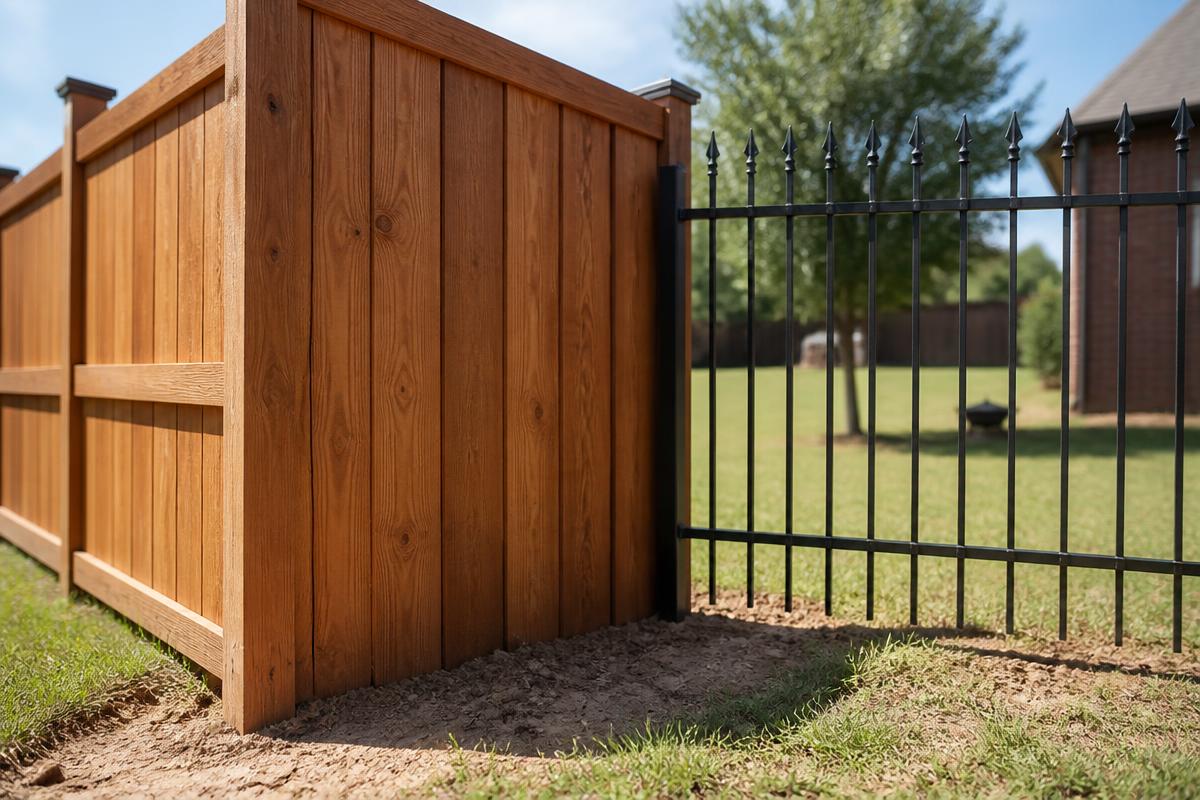
The four things Dallas weather does to a fence
Fence material comparisons written for a national audience rarely match what actually happens in North Texas. Locally, four stresses do nearly all of the damage, and they act on different parts of the fence.
- Ultraviolet light and heat. Long, intense summer sun breaks down the surface of unfinished wood, turning it gray and rough, and it degrades unpigmented or worn-out finishes. Metal is unaffected chemically, though dark finishes get very hot.
- Wet–dry cycling. Heavy rain followed by weeks of drought makes wood swell and shrink, which is what produces cupped boards, popped fasteners, and split pickets.
- Expansive clay soil. Much of the area sits on clay that swells and shrinks with moisture, moving posts season after season. This is the single biggest cause of fences that lean.
- Storm wind. A solid privacy fence catches wind like a sail, and the entire load lands on the posts and footings.
Notice the pattern: sun and moisture attack the boards, while soil and wind attack the posts. Homeowners tend to shop for boards. Fence life is usually decided by posts.
Wood: the default for privacy
Wood remains the most common residential choice around Dallas for a simple reason — it is the only mainstream material that gives a fully screened backyard at a reasonable price. The real decision inside "wood" is species and layout.
Cedar
Cedar is naturally resistant to decay and insects and is dimensionally stable relative to cheaper softwoods, meaning it is less prone to dramatic warping as it dries. It is the usual recommendation when appearance over time matters and the budget allows. It still needs a pigmented finish to keep its color; left bare, cedar weathers to silver-gray.
Pressure-treated pine
Pine is treated chemically rather than naturally resistant, and it is the lower-cost option. It performs acceptably here, especially for posts and rails, but it moves more as it dries, so board-level maintenance and the occasional replacement picket should be expected.
Layout matters as much as species
Board-on-board overlaps pickets so gaps do not open up as the wood shrinks — a meaningful advantage in a climate that dries fences out. Side-by-side pickets cost less but will show daylight between boards eventually. Horizontal layouts look contemporary and put more demand on post spacing and post strength, because the boards span between posts rather than hanging on rails.
Iron, steel, and aluminum: for views and pools
Metal fencing does not care about ultraviolet light, does not cup or split, and does not need staining. What it does not do is provide privacy. That makes it the right answer for front yards, decorative boundaries, view fences at the back of a lot, and pool enclosures where visibility is part of the point.
Wrought iron and ornamental steel are strong and heavy; their weak point is the coating. Where a finish is chipped or scratched, moisture reaches the steel and rust starts, so touch-up is the maintenance item. Aluminum will not rust at all and is lighter, which makes it easier on gate hardware, but it is also easier to damage on impact. On a sloped lot, ask whether panels will be raked to follow the grade or stepped, because the two look quite different.
Posts and footings: where Dallas fences are won or lost
Because of the soil, post detail deserves more of your attention during a bid conversation than the picket grade does. Reasonable questions to ask any contractor:
- What post material is used, and what diameter or dimension?
- How deep are the holes, and how wide is the concrete footing?
- What is the post spacing, and does it change for gates or tall runs?
- How is water kept from standing at the post base?
- How are gate posts reinforced, since gates carry moving load all day?
Two bids that look identical on paper often differ entirely in these answers, and that difference is what you feel in year five. If an existing fence is already leaning, the decision is usually about posts rather than material — the repair-versus-replace question is covered on the fence repair page.
Matching material to the situation
- Full backyard privacy: wood, cedar if the budget allows, board-on-board if long-term gap-free screening matters.
- Front yard or decorative boundary: ornamental metal, which keeps the house visible and needs no refinishing.
- Pool enclosure: metal, for visibility through the fence and because it is unaffected by splash and humidity. Local pool barrier rules apply, so confirm requirements for your address.
- Windy, open lot: either a metal fence, or wood with stronger posts, tighter post spacing, and a design that lets some air through.
- Mixed needs: wood on the side and rear property lines, metal across a view or driveway opening. This combination is extremely common here.
Maintenance expectations by material
Every material asks for something. Wood wants periodic cleaning and a pigmented stain or sealer, with the sun-facing runs needing attention first. Steel wants finish touch-ups wherever the coating gets broken. Aluminum wants very little beyond washing and occasional hardware checks. Gates of any material want hinge, latch, and — if automated — operator service, because they are the only part of a fence with moving parts.
If you would rather talk it through than read specifications, call and describe your yard: the length of the run, the sun exposure, whether you need privacy, and whether a driveway or pool is involved. That is usually enough to narrow the material choice in a few minutes.
Related fence pages
- Wood FencesCedar, pine, privacy, board-on-board, and horizontal layouts.
- Iron FencesWrought iron and ornamental metal for open views and pool enclosures.
- Fence CostHow material, height, and site conditions change what you pay.
- Fence StainingThe maintenance step that keeps a wood fence from graying out.
Frequently Asked Questions
- What is the most durable fence material for Dallas weather?
- There is no single winner, because the local stresses pull in different directions. Metal fencing — wrought iron, ornamental steel, or aluminum — is unaffected by ultraviolet light the way wood is, and it does not warp or cup, but it does not screen a yard and steel needs its finish maintained where it chips. Wood, cedar in particular, handles Texas heat well when it is installed with sound posts and kept finished, and it is the only common residential choice that gives full privacy. Most Dallas homeowners end up mixing them: wood on the property line, metal where the view matters.
- Does the clay soil in Dallas really affect a fence?
- Yes, and it is usually the deciding factor in how long a fence stays straight. Much of the Dallas area sits on expansive clay that swells when wet and shrinks in drought, so posts are pushed and released season after season. That is why post depth, footing size, and post material matter more to fence life here than the boards do. A fence that leans within a few years is almost always a post problem, not a picket problem.
- Is cedar or pine better for a Dallas fence?
- Cedar has natural resistance to rot and insects and tends to hold its shape better as it dries, which is why it is the common premium choice. Pressure-treated pine costs less and is treated chemically for ground contact and decay resistance. Both work in North Texas; the honest trade-off is upfront cost against how much movement and maintenance you are willing to accept. Talk through your budget and how long you plan to stay in the home before choosing.
- How does sun exposure change what I should build?
- South- and west-facing fence runs take the hardest ultraviolet and heat load and will always show wear first. On those runs, a pigmented stain matters more, board choice matters more, and darker metal finishes get hot to the touch. If a run is fully shaded by mature trees the opposite problem appears: slower drying, more moisture at the base, and more attention needed where wood meets soil.
- What about wind from Dallas storms?
- A solid privacy fence acts like a sail, so wind load is carried entirely by the posts and their footings. Taller and more solid means more load. Where wind is a known concern, the usual answers are stronger posts, closer post spacing, deeper footings, or a design with some airflow — a board-on-board style, a spaced-picket section, or a lattice or open top. Storm damage that shows up as whole leaning sections nearly always traces back to posts.
Not Sure Which Material Fits Your Dallas Yard?
Call to walk through your property line, sun exposure, and privacy needs with a fence professional.
(469) 620-7255Serving homeowners throughout Dallas and surrounding Dallas-area communities.