Dallas, TX
Fence Staining in Dallas, TX
Staining is the maintenance step that most changes how a wood fence looks in year five — and the step most often rushed. Preparation, timing, and product choice matter more than the color. Call to discuss your fence with a Dallas-area fence professional.
Why homeowners stain a wood fence
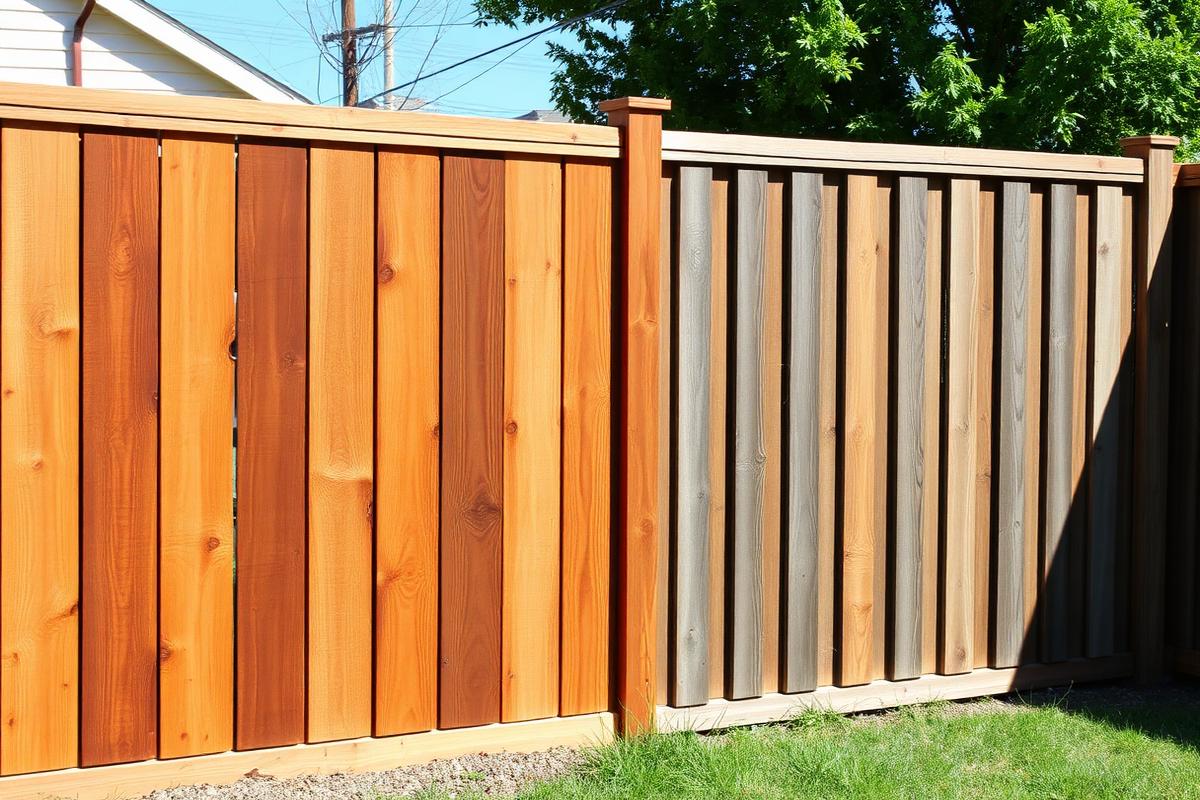
Left untreated, wood exposed to sun and rain loses its color, the surface fibers roughen, and the face takes on and releases moisture freely with every weather swing. Staining addresses both the appearance and part of the exposure: pigment limits ultraviolet damage, and the finish slows how fast the surface wets and dries. Many homeowners also stain simply because a uniform color makes a fence read as part of the house rather than a boundary.
What a finish will not do is fix structural problems. If posts are moving or boards are loose, handle that first — see fence repair.
Staining a new fence
Fresh lumber often arrives with more moisture in it than a finish can tolerate, and it may carry mill glaze from the milling process. Both interfere with penetration, which is why new fences are usually left to dry before staining and the surface is prepared rather than coated straight away. Product labels are the authority on how long to wait and how to prepare; the practical field check is whether sprinkled water soaks in instead of beading on the surface.
Staining an existing fence
Weathered fences need more preparation and repay it. Loose gray fibers, mildew, and old failing finish all have to come off or the new coat sits on a surface that is already letting go. Expect cleaning, sometimes a wood brightener where the wood has darkened, and light sanding on rough spots. Replacement boards will often take stain differently than boards that have aged next to them, so the color can even out over time rather than immediately.
Weather exposure and the Texas sun
Exposure is not uniform across a fence. The faces that get long afternoon sun in a North Texas summer fade and dry fastest, so the same fence can look freshly finished on one run and tired on another. Sprinkler spray is the other common culprit: repeated wetting at the base of pickets and posts keeps that zone damp and shortens how long a finish holds there. Adjusting sprinkler heads away from the fence is one of the cheapest maintenance improvements available.
Preparation
- Repair or replace loose boards, rails, and failing posts first
- Clean off dirt, mildew, and loose weathered fibers
- Let the wood dry to a moisture level the product allows
- Trim vines and shrubs back from the fence face
- Protect plants, hardscape, and anything downwind of spray
- Plan around temperature, humidity, and direct sun as the label directs
Staining vs. sealing
Sealers focus on repelling water and are typically clear or lightly tinted. Stains add pigment, and pigment is what shields wood from ultraviolet light — one reason clear finishes generally need attention sooner on sun-exposed fences. Within stains, the choice runs from transparent, which shows the most grain, to semi-transparent, semi-solid, and solid, which hide progressively more of the wood and put more film on the surface. More pigment usually means more UV protection and less visible grain.
Timing considerations
Most finishes specify a temperature range, a limit on humidity, and a dry window after application — and rain inside that window can ruin a coat. Working out of direct sun keeps the stain from flashing off before it penetrates. In practice, mild stretches in spring and fall are the easiest windows locally, though a dry period with moderate temperatures works any time of year.
Maintenance after staining
Keep sprinklers off the fence, keep vegetation from trapping moisture against the boards, rinse dirt and pollen off periodically, and watch the sun-exposed faces for the first signs of fading. Re-coating a fence that is only starting to lose its finish takes far less preparation than restoring one that has gone fully gray. Follow the re-coat guidance for the specific product that was applied.
What affects fence staining cost
Total linear footage and fence height set the surface area. Beyond that: whether one side or both are being finished, how much cleaning and preparation the wood needs, whether repairs come first, the product chosen and how many coats, application method, access along the fence line, and protection of nearby landscaping. We do not publish prices we have not verified — see the fence cost guide for how projects are itemized, and our wood fence page for how material choices affect maintenance in the first place.
Related fence pages
Frequently Asked Questions
- How soon can a new fence be stained?
- New wood usually needs time to dry before it will accept a finish, and how long depends on the wood, how wet it was when installed, and the weather since. Product labels give drying guidance, and a simple water test — whether droplets soak in rather than bead up — is the check most applicators use. Staining wood that is still wet inside is the most common cause of a finish that peels.
- What is the difference between stain and sealer?
- A sealer is mainly about water repellency and is usually clear or close to it. A stain adds pigment, and that pigment is what provides meaningful protection from ultraviolet light. Many products do both. Because clear finishes offer little UV protection, pigmented products are generally preferred on fences that get strong sun.
- How often does a fence need to be re-stained?
- There is no single interval we can honestly publish for every fence. It depends on the product used, how the wood was prepared, and how much sun and sprinkler exposure that run gets — south- and west-facing faces almost always need attention first. The practical test is the fence itself: when water stops beading and the color has gone flat or blotchy, it is time. Follow the maintenance guidance on the product that was applied.
- Does staining actually protect the wood or just change the color?
- Both. The pigment reduces ultraviolet damage that grays and roughens the surface, and the binder helps limit how quickly the wood takes on and gives up moisture. Neither stops wood from aging, and neither fixes rot that has already started at a post base.
Thinking About Staining Your Dallas Fence?
Call to talk through the condition of your fence, timing, and what a finish will and won't fix.
(469) 620-7255Serving homeowners throughout Dallas and surrounding Dallas-area communities.