Dallas, Texas · Fence Resource
Fence Installation in Dallas, TX
Whether you are hiring a fence company for a full installation, calling about a repair, or pricing a driveway gate, start here. Compare wood, iron, and gate options for your property, then call to talk it through with a Dallas-area fence contractor. No forms — just a conversation about what your fence line needs.
Serving homeowners throughout Dallas and surrounding areas.
Fence Services in Dallas
Start with the service closest to your project. Each page covers what to expect, what affects the work, and the questions worth asking before hiring.
Fence Repair
Leaning sections, failed posts, broken boards, storm damage, and gates that no longer latch — plus when replacement makes more sense.
View Fence Repair detailsWood Fences
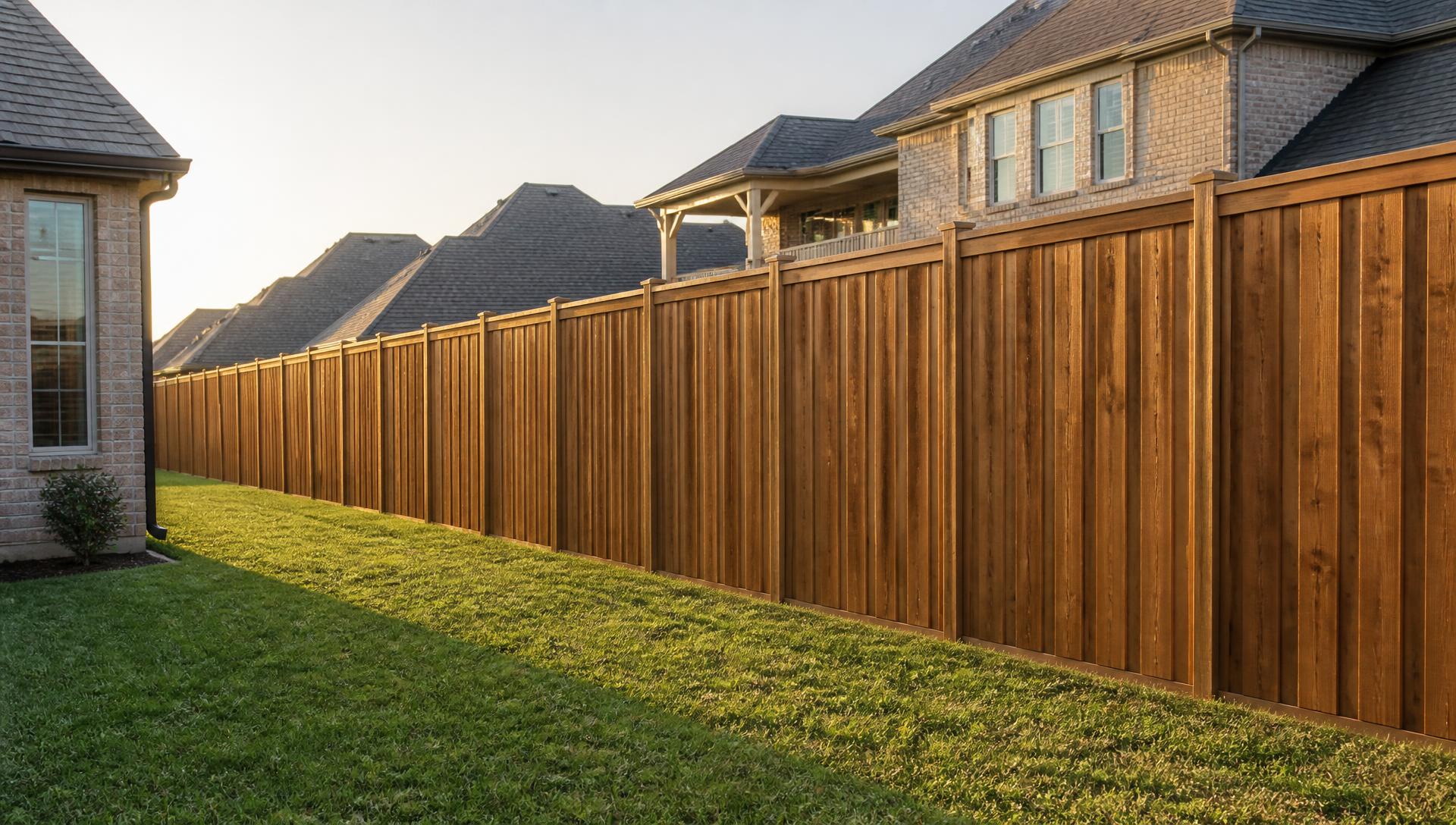
Cedar, pine, privacy, board-on-board, and horizontal layouts — the most common residential choice across North Texas.
View Wood Fences detailsIron Fences
Wrought iron and ornamental steel or aluminum fencing for open views, front yards, and pool enclosures.
View Iron Fences detailsAutomatic Gates
Gate operators, swing and slide configurations, and automation paired with new or existing fencing.
View Automatic Gates detailsDriveway Gates
Sliding and swing driveway gates, materials, access control, and how a gate ties into the fence line.
View Driveway Gates detailsGate Repair
Gates that won't open or close, sagging frames, worn hinges, track problems, and automatic gate faults.
View Gate Repair detailsFence Staining
Staining and sealing wood fences in the Texas sun — preparation, timing, and what changes the cost.
View Fence Staining detailsFind the Right Fence for Your Property
Most fencing decisions come down to four things: how much privacy you want, how the fence should look from the street, how much maintenance you're willing to do, and how the material handles local weather.
- Wood
- The most common residential option in North Texas. Boards can be set side by side, board-on-board for fewer gaps, or with a cap and trim for a more finished look.
- Cedar
- A step up from standard pine in appearance and natural resistance to rot and insects. Often paired with treated or steel posts for longer service life.
- Privacy
- Taller fences with tight board spacing that close sightlines into a yard. Height and style choices affect both privacy and wind load.
- Iron and metal
- Ornamental steel or aluminum picket fencing keeps views open, works well around pools and front yards, and needs little upkeep beyond finish touch-ups.
- Decorative
- Mixed-material designs, horizontal board layouts, lattice or trim tops, and stained finishes that match a home's architecture.
- Gate systems
- Walk gates, double drive gates, and automated driveway gates. Hardware, framing, and post size matter more on gates than anywhere else in a fence.
Fence Installation in North Texas
Fencing in North Texas takes a beating from the climate. Long stretches of intense summer heat and direct sun dry out and fade wood, especially on south- and west-facing fence lines. Spring storms bring strong straight-line winds that put real pressure on tall privacy panels, and the load lands squarely on the posts.
Local soils are a bigger factor than most homeowners expect. Much of the Dallas area sits on clay-heavy soil that expands when wet and shrinks when it dries out. That seasonal movement can push posts out of plumb over time, which is why post depth, post material, and how posts are set often matter more to a fence's lifespan than the pickets you see.
Drainage and property layout matter too. Fence lines that run through a low spot, along a slope, or next to a downspout discharge stay wet longer, and moisture at the base of a wood post is the most common starting point for rot. Yards with mature trees add root obstacles and shade, and rear-access alleys or narrow side yards affect how materials get in and out.
Maintenance expectations should be part of the decision, not an afterthought. Wood typically benefits from periodic cleaning and a stain or sealer to slow sun and moisture damage. Metal fencing needs far less, but scratches in a powder-coated finish should be touched up so corrosion doesn't spread. A fence professional who works in the area can explain how each option has held up on properties like yours.
Hiring a Fence Company in Dallas
The words homeowners use vary — fence company, fence contractor, fence installer, fence builder — but the questions worth asking are the same. Ask who will actually be on the property and how the crew is supervised. Ask what post material and footing depth are being quoted, since that is what determines whether the fence stays straight. Ask whether demolition and haul-away of an old fence are included. And ask for the scope in writing, itemized, so two bids can be compared on equal terms rather than on a single number.
It is also worth confirming who is responsible for locating utilities before posts go in, how the crew handles a shared fence line with a neighbor, and what happens if a post has to move because of a tree root or a buried line. A contractor who works this area regularly will have straightforward answers to all of it. Licensing, insurance, and warranty terms should be confirmed directly with whoever you hire.
If you would rather just describe the project out loud, calling is the fastest route — the number on this page connects you with a Dallas-area fence professional.
- Fence repair — leaning sections, failed posts, storm damage, and when replacement makes more sense
- Wood fences — cedar, privacy heights, board-on-board, and horizontal layouts
- Iron and ornamental metal fences — open views, front yards, and pool enclosures
- Driveway gates — sliding and swing designs, materials, and layout
- Automatic gates — operators, access control, and installation factors
- Gate repair — gates that sag, stick, or stop responding
- Fence staining — protecting wood from the Texas sun
- Fence cost — every variable that shows up in an estimate
Fence Installation Process
Here's what homeowners can generally expect when working with a fence professional. The details vary by company and by project.
- Step 1
Discuss the project
Describe the property, the fence you have now, and what you want to accomplish — privacy, pets, curb appeal, or replacing storm damage.
- Step 2
Evaluate the property and needs
Expect a walkthrough of the fence line to look at length, slope, drainage, existing posts, access for materials, and where gates should go.
- Step 3
Choose material and style
Compare wood species, board layout, height, post material, metal options, and finish. This is where maintenance expectations get set.
- Step 4
Receive a project estimate
A written estimate should break out footage, materials, gates, demolition and haul-away, and anything unusual about the site.
- Step 5
Schedule installation
Once scope is agreed on, work is scheduled around material availability and weather, then the line is built and the site cleaned up.
Fence Cost in Dallas
There's no single price for a fence. Two homes on the same street can land in very different ranges depending on footage, material, gates, and what has to be removed first. Rather than publish numbers we can't stand behind, our Dallas fence cost guide explains each factor so you can read an estimate with confidence.
- Linear footage of fence
- Fence height
- Material and grade
- Demolition and removal of an old fence
- Number and size of gates
- Terrain and slope
- Site access for materials and equipment
- Design complexity and custom details
Fence Service Across North Texas
Soil, HOA rules, permits, and the age of existing fencing change from city to city. Choose your city for local detail, or see all fence service areas.
Plano, TX
Established neighborhoods with aging cedar privacy fences, plus HOA height and style rules on most streets.
Frisco, TX
Newer construction where builder-grade fences are reaching their first replacement, with strict HOA specifications.
Garland, TX
Older Dallas County housing stock where post rot, alley-facing fences, and storm damage drive most calls.
Irving, TX
A mix of mid-century neighborhoods and dense newer development, with Las Colinas HOA and gate work common.
Richardson, TX
Mature tree-lined neighborhoods where root systems, shade, and older posts complicate fence lines.
Carrollton, TX
Established suburban streets with long shared fence lines, alleys, and steady repair and staining demand.
Frequently Asked Questions
- How long does fence installation usually take?
- For a typical residential backyard, installation is often completed in one to three working days once materials are on site and the layout is set. Larger properties, custom designs, difficult terrain, removal of an old fence, or automatic gate work can extend the timeline. Weather delays are common in North Texas, especially during heavy spring rain.
- What fence materials work well in Dallas?
- Cedar is a popular wood choice locally because it resists rot and insects better than untreated pine, and pressure-treated posts or steel posts help with ground movement. Ornamental steel and aluminum hold up well with a quality powder-coated finish. The right choice depends on your goals for privacy, appearance, budget, and how much maintenance you want to take on.
- Should I repair or replace my fence?
- Repair usually makes sense when the posts are still solid and the damage is limited to a few boards, rails, or one section. Replacement tends to be the better value when posts are rotting or leaning in multiple places, when boards are widely warped or cracked, or when repairs would cover a large share of the fence line. A fence professional can walk the line with you and explain what they see.
- How long does a wood fence last?
- Lifespan varies with material, construction, drainage, and maintenance. Cedar pickets with well-set posts commonly last longer than untreated pine, and staining or sealing on a regular schedule helps slow sun and moisture damage. Posts are usually the first component to fail, which is why post material and setting method matter so much.
- What affects fence installation cost?
- The biggest drivers are total linear footage, fence height, material and grade, the number of posts, how many gates you need, whether an existing fence must be demolished and hauled away, terrain and slope, site access for equipment, and any custom design details. Because these vary property to property, a walkthrough is the only reliable way to get accurate numbers.
Planning a Fence Project in Dallas?
Call to discuss your fence installation, repair, or replacement needs with a Dallas-area fence professional.
(469) 620-7255Serving homeowners throughout Dallas and surrounding Dallas-area communities.