Dallas, TX
Driveway Gates in Dallas, TX
A driveway gate is the most visible part of a fence line and the part that has to work every single day. Style, opening width, slope, and how the gate will be operated all interact. Call to talk your driveway through with a Dallas-area fence and gate professional.
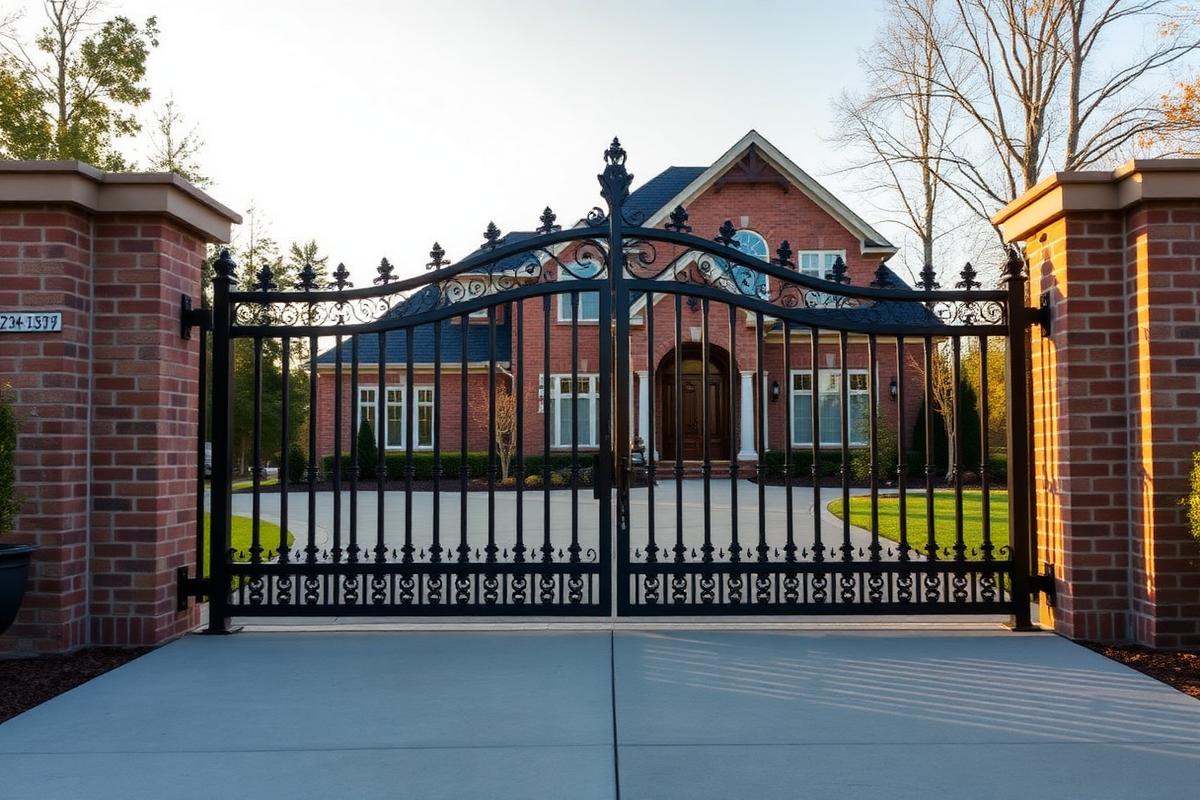
Driveway gates in Dallas
Homeowners add a driveway gate for three broad reasons: controlling who reaches the house, keeping children and pets away from the street, and finishing the front of the property. Those goals pull the design in different directions. A gate meant mainly for privacy is solid or closely spaced; a gate meant mainly for curb appeal is usually open picket so the house stays visible. Deciding which matters most early keeps the rest of the choices simple.
Sliding vs. swing driveway gates
Swing gates hinge on one or both sides and open into or out of the property. They tend to look the most residential, and a bi-parting pair suits wide openings. They need unobstructed room to travel and a reasonably level arc, so a driveway that rises steeply from the street can rule them out.
Sliding gates travel sideways across the opening, which is why they are common where the driveway slopes or where cars park close to the gate. They need clear space alongside the opening for the gate to retract into. Roller-track designs run on a ground track, which needs to stay clear of debris; cantilever designs carry the gate above the driveway instead.
Privacy and access
Privacy at the driveway is a matter of infill. Open pickets give visibility and an airy look; adding a privacy backing, closely spaced pickets, or wood infill closes the view but also increases wind load, which raises the demands on posts, framing, and any operator.
Access is worth planning before the gate is built, not after. Keypads, remotes, phone-app control, intercoms, vehicle sensors, and provisions for deliveries and guests all affect where conduit and power need to go. Our automatic gate page covers operators and access equipment in more detail.
Materials
- Wrought iron and ornamental steel. Strong, traditional, and the most common choice for drive gates. The finish is what protects it, so quality of coating matters.
- Aluminum. Lighter and corrosion resistant, which reduces load on hinges and operators, though it is less rigid than steel at wide spans.
- Wood on a metal frame. Matches a wood fence line while keeping the structural strength a gate needs. Wood infill weathers like any fence and benefits from the same finish care.
- Mixed material. Metal frame with horizontal wood slats, or metal picket with a wood privacy backing, both common on modern homes.
Pairing a gate with your fence
A drive gate should look intentional next to the fence beside it. Repeating a material, picket profile, or top line ties them together, and masonry columns or heavier gate posts mark the entry. Because the gate is the heaviest moving part of the fence line, the posts and footings at the opening are typically larger than standard fence posts. If the fence itself is still being planned, our wood fence page and iron fence page cover the styles most often paired with drive gates.
Design considerations
- Opening width, and whether one leaf or two suits it
- Driveway slope and crown across the opening
- Which direction the gate can safely travel
- Sight lines for a driver pulling out into the street
- Setback from the street so a vehicle can wait off the road
- A pedestrian gate if people arrive on foot
- Neighborhood association rules on style, height, and materials
Installation factors
Most of the work on a driveway gate is not the gate. Post and footing size, soil conditions, existing concrete or masonry at the opening, drainage across the driveway, and running power and low-voltage conduit if the gate will be automated all shape the schedule. Local permitting and any association approval should be confirmed for your address before fabrication begins.
Driveway gate cost factors
Opening width, gate style and infill, material, frame construction, post and footing requirements, masonry work, automation and access control, electrical runs, and site access are the main drivers. We do not publish invented prices — see the Dallas fence cost guide for how these variables interact, then call to discuss your specific opening.
Related fence pages
Frequently Asked Questions
- Should I choose a sliding or swing driveway gate?
- It usually comes down to the driveway. Swing gates need clear space to open, and a slope toward or away from the street complicates the arc. Sliding gates need level room to one side along the fence line. Where space is tight on both counts, a bi-parting swing or a cantilever slide is often discussed on site.
- Does a driveway gate have to match my fence?
- No, but the transition matters. Many homeowners pair an ornamental metal gate with a wood fence, or repeat the fence style in the gate infill so the two read as one line. Post size and framing at the gate opening are usually heavier than the rest of the fence regardless of style.
- Can a gate be added to a fence I already have?
- Often yes. The main questions are whether the existing posts near the opening can carry gate loads, whether the opening width suits the gate type you want, and whether power can be run to the opening if automation is planned.
- How much does a driveway gate cost in Dallas?
- There is no single number, and we do not publish figures we have not verified. Opening width, material, gate style, post and footing requirements, automation, and how power and access control are run all move the total. A walkthrough is the reliable way to get a real figure.
Planning a Driveway Gate in Dallas?
Describe your driveway, the look you want, and whether you want it automated — then get connected with a Dallas-area professional.
(469) 620-7255Serving homeowners throughout Dallas and surrounding Dallas-area communities.